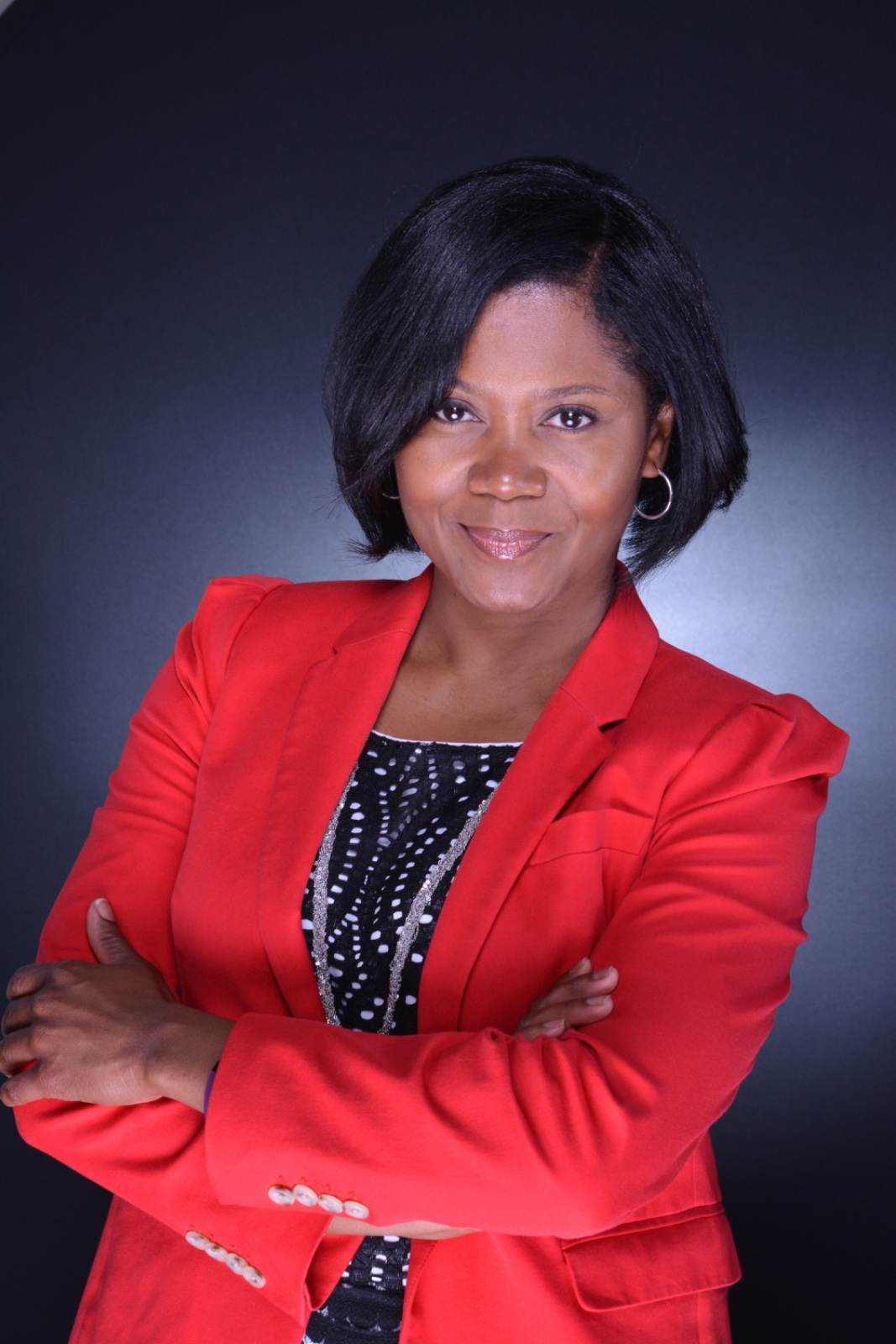
As a girl growing up in a public housing project in Vicksburg, Mississippi, Dr. Clara Ross Stamps lived about half a mile from the Vicksburg National Military Park. She slipped onto its grounds often, climbing the hills and reading the inscriptions on the Confederate monuments she passed on her way to school. Her teachers said almost nothing about the Civil War or about the river city that President Abraham Lincoln once called the key to Union victory. She would spend her teenage years filling that gap herself.
Today, Stamps is chief marketing and communications officer at the Thurgood Marshall College Fund (TMCF), the nation's largest organization exclusively representing the Black college community. She is also an alumna of the Iota Cohort of the Higher Education Leadership Foundation (H.E.L.F.).
“If someone would have asked me if I would enter into higher ed, I would have said no,” Stamps told The H.E.L.F Review. “But if they would have asked me growing up if I would have been actively involved in my community, I would have said yes.”
That instinct came from the grandparents who raised her. Neither had much formal schooling, and Stamps was about 10 when she realized why reading the newspaper aloud had always been her assigned chore. She taught her grandmother, who could not read, how to sign her name.
“Speak up,” her grandmother told her. “You have a voice. Use it.”
The push toward college came from teachers and church members, many of them graduates of Alcorn State University and other HBCUs. When Vicksburg redrew its attendance lines ahead of her ninth-grade year and assigned half of the city’s Black students to the historically white high school, Stamps refused to leave the educators she loved. She borrowed her mother’s address and walked to Vicksburg High School every day. When some white students at the newly integrated school moved to scrap Black History Month, she used her spot on the morning announcement team to share a fact about Black achievement each day, and soon classmates of both races were debating those facts in homeroom.
As a junior, she joined a work program through Hinds Community College, an early version of what schools now call dual enrollment. It sent her to interview at the military park, where she sat among roughly 30 applicants as the only Black student. Rangers asked the others about their favorite subjects. They asked her about her motivation.
Stamps answered honestly: her grandmother was battling cancer for the second time, and the family needed the income. She got the job.
When she pressed the park historian about the role African Americans had played in the war, he brushed her aside while making time for the white college students on staff. Her grandfather told her to do her own research and read books by her own people. The result was an English paper titled “They Paid the Price for Freedom.” Without telling her, her teacher sent it to the Vicksburg Post, which ran it on the front page.
Days later, Stamps was summoned to the superintendent’s office, certain she was in trouble. Instead, he asked whether she planned to attend college. She said she couldn't afford it and expected to help support her younger siblings. He arranged a cooperative position that let her alternate semesters of school and paid work. Before graduating, she helped produce the park's first brochure on African Americans and an educational guide that brought the city's Civil War history into local classrooms.
After earning a business degree from Mississippi College, Stamps built a career in tourism and at predominantly white institutions until a realization stopped her. "I could stay here and work with these institutions," she said, "but I want to work with my people."
She took a public relations job at Alcorn, and from there her rise was swift. Within months, she had moved to the main campus as an assistant vice president, and over the next decade she climbed to vice president for marketing and communication. In 2017, she joined Kentucky State University as a senior vice president, and in July 2021, its board named her acting president. Later, Dr. Harry L. Williams, TMCF’s president and CEO, brought her on as a consultant, and the work soon became a full-time role.
Stamps had long assumed H.E.L.F. was strictly a pipeline to the presidency, a job she did not want. Her view shifted when she heard co-founder Dr. Herman J. Felton Jr. describe the program, and she began to see it as a way to serve students better.
“When you're on an HBCU campus, you wear more than just your hat,” she said.
Her cohort still keeps a group chat, and members call one another to celebrate promotions and to steady each other through hard seasons.
At TMCF, she still mentors students. She recently helped one young woman negotiate her first employment contract, urging her to request professional development and childcare benefits.
“Baby, this is a billion-dollar corporation you're going to work for,” Stamps told her. “You can ask for these things.”
Decades later, her first-grade teacher still sends her letters in the mail, and her high school English teacher keeps checking in. Stamps sees her work as an extension of theirs. While the historian at the Vicksburg park never made time for the Black teenager who kept asking questions, Stamps makes time for every one of those students she can find.
“I became that for so many of my students,” she said. “I am championing them on now.”