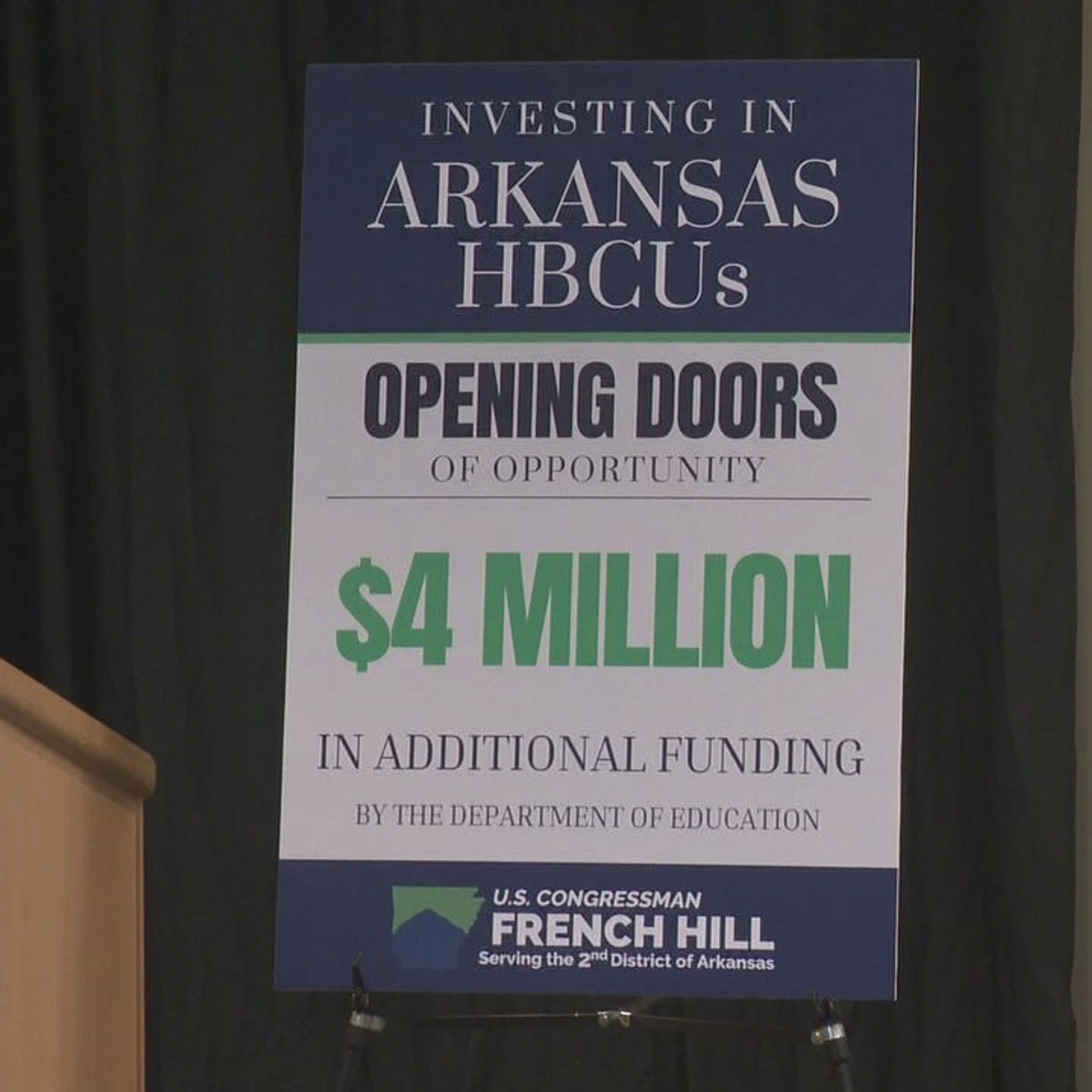
Leaders representing Arkansas Baptist College, Shorter College, the University of Arkansas at Pine Bluff and Philander Smith University gathered on the Philander Smith campus on Monday, Sept. 28, as U.S. Rep. French Hill, R-Ark., announced that the state's historically Black institutions will share more than $4.2 million in supplemental federal money.
The Arkansas allocation is a slice of a national package. On Sept. 22, the U.S. Department of Education announced a one-time investment of more than $174 million to strengthen the nation's HBCUs, unveiled by Education Secretary Linda McMahon at the HBCU Summit at the White House. The money, distributed through Title III, comes on top of what Congress appropriated for fiscal 2026 and follows a one-time infusion of $438 million last year.
Hill framed the award as a bet on Arkansas's future, calling HBCU support "an investment in our young people, an investment in our workforce" and in the communities those campuses anchor.
UAPB will receive $1.6 million through the Education Department's Title III Strengthening Historically Black Colleges and Universities Program, while Philander Smith will receive $1,139,146. The supplemental dollars can support academic programs, student services, facilities, technology and financial management.
Campus leaders described urgent, concrete uses. At UAPB, Chancellor Anthony Graham said the federal support could help address deferred maintenance in academic buildings and residence halls, adding that federal money "makes all the difference in the world."
Philander Smith President and CEO Maurice Gipson said the university has students with unmet financial needs and could use the funds for scholarships and other student programs, calling them "critical dollars we could use today."
Still, the presidents were candid about the limits. They said the $4.2 million will not address all of their financial needs, and Hill said the federal investment is also intended to help HBCUs leverage private philanthropy and state support for larger campus projects.
Those larger ambitions hinge on separate legislation. Hill and Rep. Alma Adams of North Carolina highlighted their work on the IGNITE HBCU Excellence Act, which seeks to strengthen HBCU infrastructure and encourage greater public and private investment. The bill would establish competitive grants for building and renovating classrooms, research laboratories, student housing and broadband infrastructure — needs distinct from Monday's one-time award.