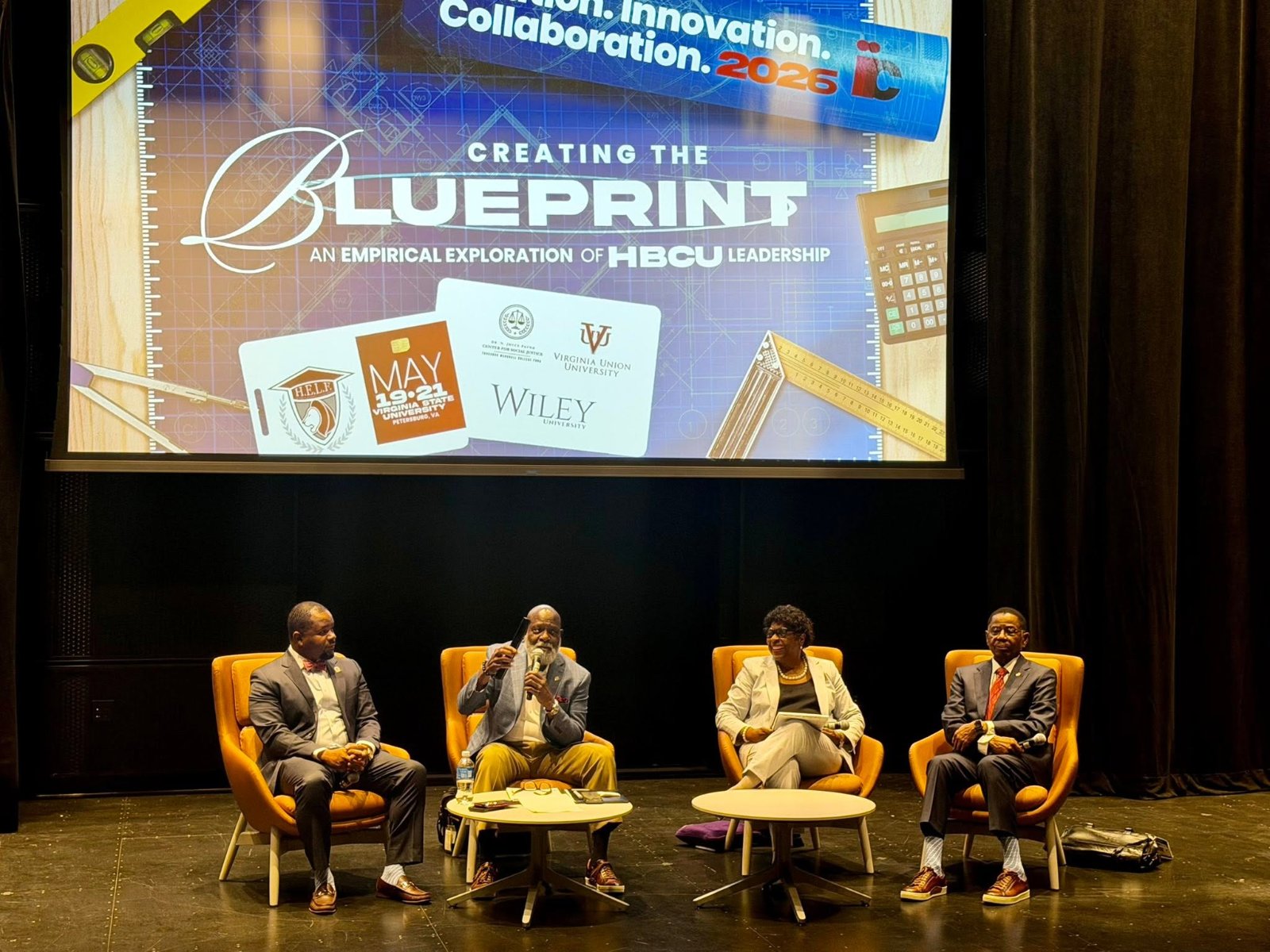
The Higher Education Leadership Foundation held its third national convening at Virginia State University, bringing sitting and emeritus presidents together with trustees and higher education scholars for three days on a single question: what does the HBCU presidency actually require?
Dr. Herman Felton Jr., Wiley University president and H.E.L.F. founder, set the terms early — the field needs to “interrogate — with data, with scholarship, with practitioner truth — what the HBCU presidency actually demands.” The convening was built to be uncomfortable in exactly that way.
“Interrogate — with data, with scholarship, with practitioner truth — what the HBCU presidency actually demands.”Dr. Herman J. Felton Jr. · President, Wiley University
The Unreadied President
Much of the discussion centred on what participants called the “unreadied president” — leaders who arrive in the role without the preparation, the board relationship or the institutional support the job requires. Research presented at the convening indicated that the average HBCU presidency now lasts roughly three years.
That figure reframes presidential turnover as a structural problem rather than a series of individual failures, and puts board governance and succession planning at the centre of the conversation.
Transitions and Governance
Sessions examined how presidential transitions are handled — how successors are identified, how boards prepare for a change in leadership, and what an institution loses each time the cycle restarts without a plan.
This story draws on reporting first published by Wiley University. Read the original coverage at Wiley University →