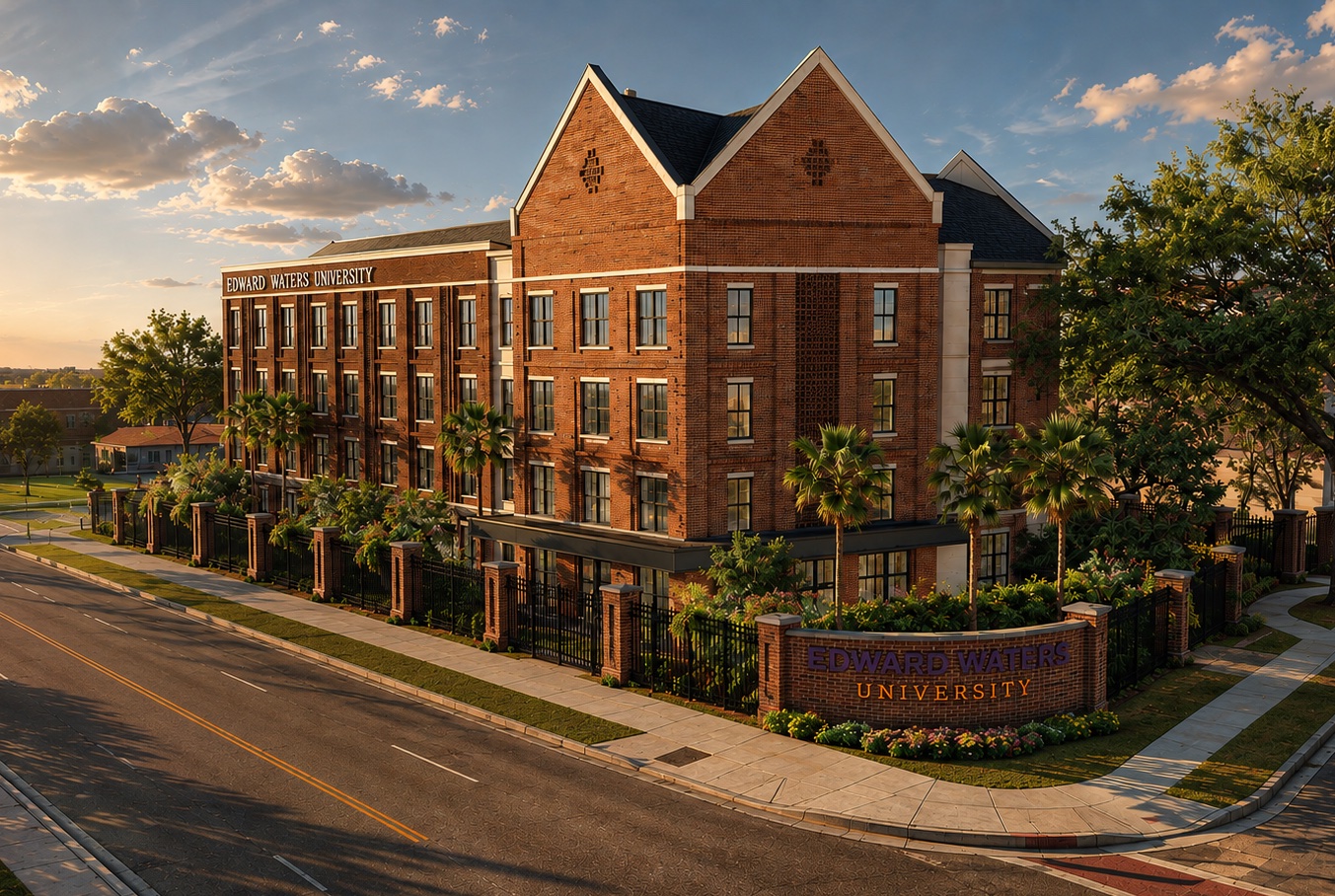
Edward Waters University will spend more than $33 million on construction and renovation through 2028, including its first new student housing in 44 years and the first on-campus track in its history, university officials announced.
The centerpiece is a $25 million project financed through the U.S. Department of Education’s Historically Black College and University Capital Financing Program. That money will pay for a residence hall with nearly 200 beds, which will become the largest housing facility on the Jacksonville grounds, along with a new track and field complex. The university closed the federal transaction on Sept. 10.
An additional sum of nearly $9 million will go toward renovating historic buildings, modernizing laboratories, centralizing student services and upgrading safety and infrastructure systems across the institution.
“This is a generational investment in the spaces where our Tigers learn, live, compete, and lead,” said Dr. A. Zachary Faison Jr., the university’s president and CEO. “In the year we celebrate 160 years as Florida’s first HBCU, we are building for the next 160.”
The announcement arrives as the private, AME Church-affiliated university experiences its strongest enrollment in decades. Fall 2026 enrollment reached nearly 1,300 students, the highest figure in more than 20 years, and the student body has grown nearly 40% since 2019. Roughly 80% of students are Florida residents.
Faison noted that the university expanded its enrollment, academic offerings, and national profile for nearly half a century without adding a single new residence hall.
A rarely tapped federal program
Congress created the HBCU Capital Financing Program in 1992 to help historically Black institutions overcome barriers to raising money for facilities, including discrimination in the bond market. The program offers loans at rates close to the federal government’s own borrowing costs. Despite those favorable terms, fewer than half of the nation’s HBCUs have used it, a gap the Government Accountability Office documented in a 2018 report.
Approval requires a federal review of an institution’s leadership continuity, enrollment trends, and at least five years of audited financial statements. Edward Waters met each standard, according to the university.
“The federal government looked closely at our leadership, our enrollment, and years of our audited finances, and it invested in Edward Waters,” Faison said. “That confidence was earned through years of disciplined stewardship.”
Jacksonville-based LandSouth Construction will build the residence hall, and Niles Bolton Associates is serving as architect. Completion is expected in 2028.
Samuel Newby, a former Jacksonville City Council president and 1984 graduate who now leads the university’s Alumni Leadership Council, said he was a 19-year-old sophomore when the last residence hall opened. “I’m 64 years old now,” he said, adding that seeing a new generation move into a modern facility is “a source of enormous pride” for him and fellow alumni.
Track to serve athletes and neighbors
The track and field facility will support the university’s NCAA Division II athletes and will also be open to the surrounding Northwest Jacksonville community. The City of Jacksonville contributed $2 million toward the project, and the university has committed to hosting health and wellness events there throughout each year.
Faison credited Mayor Donna Deegan, immediate past City Council President Kevin Carrico and the full council for backing the project. “This track belongs to our student athletes, and it also belongs to our neighbors,” he said.
Restoring historic buildings
The remaining projects reach nearly every corner of the university. Centennial Hall, its oldest building and home to the library, will receive a full renovation of its main floor, including new study and teaching spaces, a café, and restoration of its windows and brickwork. A new innovation lab will also be housed there.
The historic Lee Cousins Administration Building will see major work on its second, third and fourth floors. The fourth floor has been out of service since 2023, and its restoration will allow the Division of Finance, Administration, and Business Innovation to return after three years of displacement. The renovated building will also include a new boardroom for trustee meetings.
Other projects include a renovated chemistry laboratory in the Hatcher Stewart Science and Mathematics Building; a Student Welcome Center and Tiger One Stop to consolidate enrollment services; improvements to Milne Auditorium; and upgrades to roofing, HVAC systems, lighting, security and technology.
A broader turnaround
The building program follows several years of institutional gains. In December 2025, the university’s accreditor reaffirmed its accreditation through 2035 with no recommendations. Edward Waters has recorded seven consecutive operating surpluses, expanded from eight to 17 degree programs and more than tripled its endowment since 2018. Last month it received a $1 million endowment gift from the Dimon Foundation.
Bishop Marvin C. Zanders II, chairman of the Board of Trustees, said approving a commitment of this size required confidence in the institution’s finances, leadership and students.
“We have that confidence,” he said, “and we are proud to see this moment arrive.”