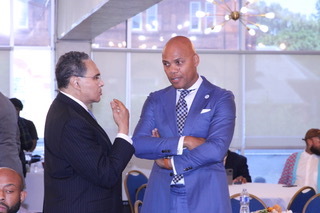
HBCU presidents, chancellors and higher education advocates gathered at Johnson C. Smith University in Charlotte for the Higher Education Leadership Foundation’s inaugural “A Futurist Symposium: Mapping the Future for the HBCU” — a meeting convened less to celebrate than to confront what comes next.
Dr. Herman J. Felton Jr., president and CEO of Wiley University and H.E.L.F.’s co-founder, framed the gathering as “a season of provocation,” pressing attendees to face the structural pressures bearing down on Black higher education: funding under threat, enrolment under strain, and institutions asked to do more with less.
“You have to become an adept salesperson.”Dr. Michael L. Lomax · President & CEO, UNCF
Selling the Case for HBCUs
UNCF president Dr. Michael Lomax told the room that advocacy is now inseparable from leadership — that presidents must be able to make the case for their institutions to donors, legislators and families with the same fluency they bring to running a campus.
Dr. David Rosowsky offered a different provocation: the “60-year degree,” a rethinking of the relationship between a university and its graduates as one that lasts a working lifetime rather than ending at commencement — with implications for how HBCUs design programmes, serve alumni and build durable revenue.
What the Symposium Signaled
Taken together, the sessions pointed at a shift H.E.L.F. has been pushing for a decade: that the HBCU presidency is a distinct discipline, and that preparing for it — and sustaining the people in it — cannot be left to chance.
This story draws on reporting first published by UNCF. Read the original coverage at UNCF →