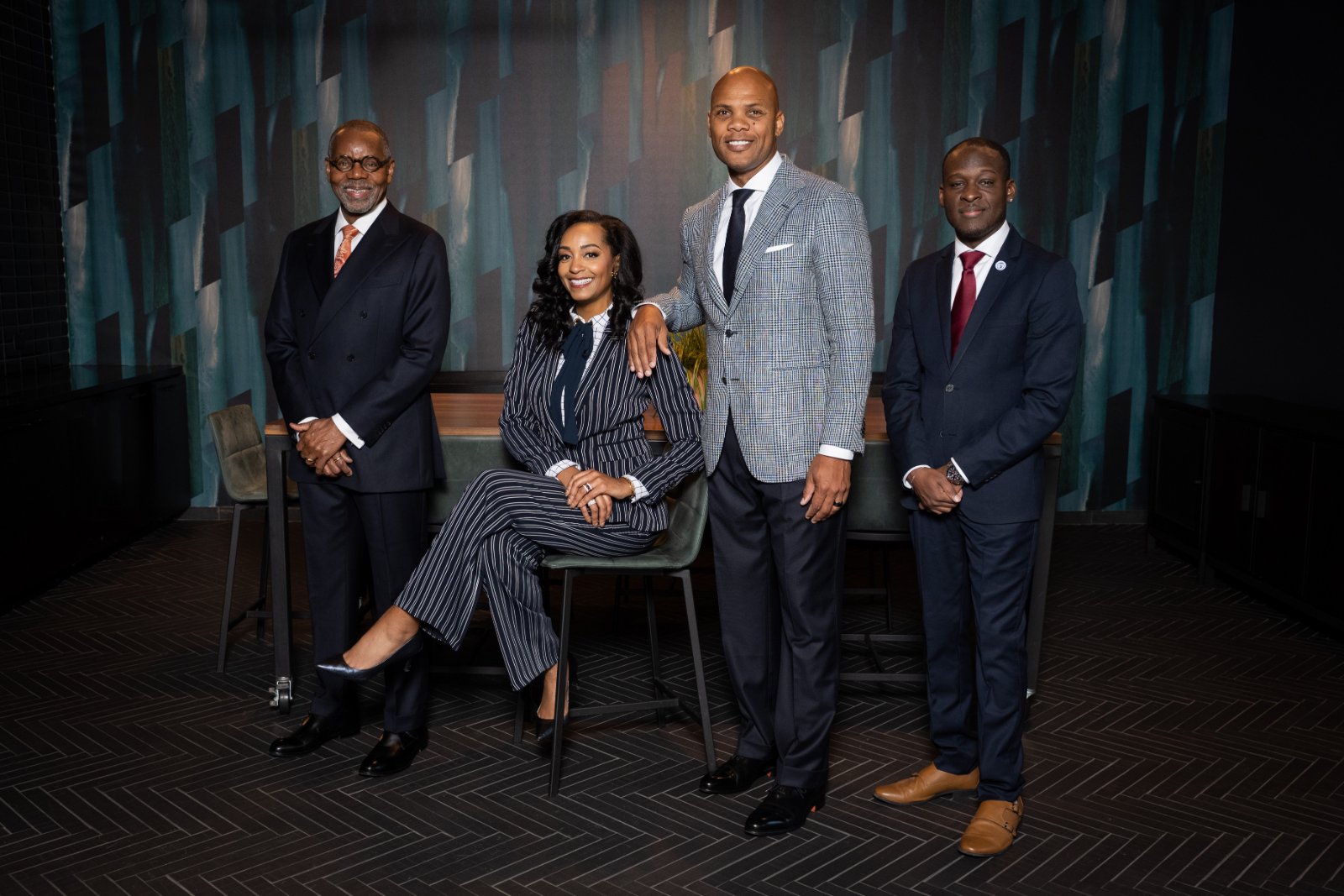
The storm that rolled into New Orleans on the day the Higher Education Leadership Foundation held its very first gathering was fitting, if unintentional. Dr. Herman J. Felton Jr., president and CEO of Wiley University, then newly arrived in the presidency and brimming with restless energy about what HBCU leaders needed and weren't getting, had helped convene a group of like-minded colleagues at the Le Méridien Hotel. He had invited three guests: Dr. Walter M. Kimbrough, then a sitting HBCU president; Dr. Elfred Anthony Pinkard, past president of Wilberforce University and now President in Residence at the United Negro College Fund (UNCF); and attorney Tony Clayton, chair of the Southern University System. They had a room reserved. They had chairs set up. What they did not have was certainty that anyone would show up.
“We had about 20 people who said they would come,” Felton recalled, “and me and [Dr.] Melva Wallace said, 'You know what, we're going to do it, and whoever comes, come.'"
In the end, a small group arrived. The conversation, though, was electric. Three questions anchored the discussion: What was it like to navigate board leadership? What did it mean to be a second-in-command—the provost, the vice president, the person behind the curtain holding an institution together? And what did it actually take to ascend to the presidency?
Those questions, modest as they seemed, were the seeds of something that would grow, over the next decade, into one of the most important leadership development movements in higher education.
H.E.L.F.—the Higher Education Leadership Foundation—is celebrating its tenth anniversary this year, and if you work at or around a historically Black college or university, you have almost certainly felt its presence, even if you don't know it by name. More than 500 fellows have passed through its leadership institutes. At least 15 of those fellows have gone on to become HBCU presidents. Scores of others have moved into cabinet-level roles, started companies, launched programs, and hired one another. There is a GroupMe chat, Felton noted with obvious delight, with more than 500 names in it.
“We just knew that there was something. There was a void, and we couldn't codify it. We initially thought we needed a gathering space for like-minded individuals who want to serve at HBCUs. That was it. That was really it.”Dr. Herman J. Felton Jr. · President & CEO, Wiley University
A Movement Without a Memo
Ask H.E.L.F.'s founders what they were trying to build in those early years and you will get the same answer, delivered with equal parts of laughter and sincerity. They had no real concrete idea.
“We just knew that there was something, there was a void,” Felton said. “And we couldn't codify it.”
In those early years, there was no strategic plan, theory of change, or logic model. What there was, instead, was a deep conviction, shared by Felton; Dr. Melva K. Wallace, president and CEO of Huston-Tillotson University; Dr. Elfred Anthony Pinkard; and Gregory D. Deas, the marketing guru who has been instrumental in all things digital—that the people who loved HBCUs enough to dedicate their careers to them, deserved a space of their own.
The early years were exercises in faith. After New Orleans, the group reconvened at National Harbor in Maryland. Dr. George French, who was then the president of Miles College in Alabama and is currently the president of Clark Atlanta University, came to speak, and after that conversation, the co-founders looked at each other and said, as Felton put it, “We're gonna go full throttle.”
Between New Orleans and National Harbor, the founders wrestled with the fundamentals: What would they call themselves? What would their colors be? How would they get recognized? What did they stand for? The lion in their logo—fierce, regal, deliberate—was no accident.
“We knew that we wanted to pay homage to our Native land,” Felton said. “We knew that we wanted a fierce representation of that.”
The first Leadership Institute was held at Miles College. The founders invited 30 people they knew personally, and 20 showed up. Nineteen of them came on scholarship. Only one paid. But in that room at Miles College, something crystallized.
“We knew that we had captured lightning in a bottle,” Felton recalled. More than that, the mission came into sharp focus. H.E.L.F. would exist to strengthen the leadership pipeline for HBCUs.
“We knew that we had captured lightning in a bottle."Dr. Herman J. Felton Jr.
The H.E.L.F. Model: What Happens in the Room
The thing that sets H.E.L.F. apart from every other leadership development programs in higher education (and there are more of them now than there were a decade ago, which Felton considers a sign of progress rather than competition), is not a curriculum. It is an orientation, an ethos, and a deliberate refusal to function the way leadership development programs typically operate.
Ask Pinkard, and he'll frame it as something even more fundamental.
"I think it was organic," Pinkard said about how the organization's mission that captured the attention of so many. "I think people began to see that there was this movement, or this organization, that was being thoughtful and intentional in developing leaders who were principled and credentialed and well-informed."
He quickly noticed that H.E.L.F began to resonate with HBCU stakeholders.
"It was like, 'Oh, look at this. I want to be a part of this. I love HBCUs, and it's exciting to see that there is something that exists that will be intentional about making sure that these institutions survive and thrive,'” Pinkard said.
When fellows arrive at a H.E.L.F. Leadership Institute, they come prepared, as Wallace puts it, “to be the smartest person in the room, and ready to compete.” They arrive in full professional armor, and then the armor slowly comes off.
“We say, 'Look, everybody's got a doctorate, everybody's got an MBA, simmer down,” Wallace said. “This is not what this is about to be. Somebody in here is in Housing, and somebody is a VP for Advancement, and everybody's okay.”
H.E.L.F., she adds, is explicitly not about functional expertise. The premise is that fellows already have that. What the Institute focuses on instead, is the personal pathway of the leadership journey, which includes self-knowledge, emotional intelligence, followership, and the particular demands of serving an HBCU.
The presenters who come to H.E.L.F. Institutes are not keynote speakers delivering polished remarks. They are sitting presidents, vice presidents, and senior administrators who agree, before they ever step into the room, to be intimate about their work. They talk about the decisions that blew up and the crises they didn't see coming. They talk about the things they would do differently and the moments when the weight of the crown became almost unbearable.
“People that are coming to present have agreed to share intimacy about their work that oftentimes they have not even shared on their own campus,” Wallace said. “So that intimacy — when you have presidents and VPs saying, 'Look, I messed this up, and this was a hot mess expressed, and I got in trouble doing XYZ—you know, and it didn't work out — like, wow, I'm okay in this space.'”
That safety and sense of protected honesty, has become H.E.L.F.'s signature product. It is more valuable than any framework or competency model. Fellows consistently cite it as the thing that made the experience different from every other professional development experience they have had.
Wallace has been particularly focused on a quality that rarely gets discussed in leadership development circles: followership. The question H.E.L.F. presses fellows to answer is not only how to lead, but how to support someone else's leadership.
Demystifying the Presidency
One of H.E.L.F.'s most counterintuitive contributions to the HBCU ecosystem has been its systematic effort to demystify the presidency and to strip away the mythology that has historically surrounded the role, replacing it with something more honest, more human, and ultimately more useful to aspiring leaders.
For much of HBCU history, the presidency carried a kind of patriarchal sanctity. Presidents were figures of near-mythic stature The president was the institution, and the institution was the president. The veil was kept firmly in place.
H.E.L.F. has worked to lift that veil, carefully and deliberately.
“We demystify the presidency,” Felton explained, “not in a way that creates a deficiency for it, or a lack of respect. But getting people to understand that we are individuals who need other individuals to do the work with us, and the same challenges befall all of us.”
The effect on fellows has been profound, and not always in the direction one might expect. Some arrive at a H.E.L.F. Institute certain they want to be a president, and leave equally certain they do not. Others arrive uncertain and leave clear. The Institute is not a recruitment mechanism for the presidency, but a truth-telling space about what the presidency actually demands.
“We need great deans of students,” Wallace said, pushing back against the notion that the only mark of HBCU leadership success is the president's chair. “We need great deans, we need great VPs, we need phenomenal chairs. We need department heads that are solid,” she added.
The H.E.L.F. model insists that leadership blooms at every level of an institution, and that the work of developing leaders cannot be reduced to simply developing presidents.
“We believe that leaders ascend to the presidency,” Felton added, “if they want to."
The Ecosystem Effect
Over seventeen Institutes—conducted twice a year since 2015—H.E.L.F. has produced something its founders did not entirely anticipate. It's a network so dense, so emotionally bonded, and so professionally active that it functions almost like a second institution layered across the HBCU landscape.
Fellows leave with more than notes and connections, but with a kind of tribalism and a cohort identity that persists long after the Institute ends. Cohorts name themselves. They establish GroupMe threads that remain active years later. They take vacations together, write grants together, start ventures together.
“Each of our cohorts really resemble Greek life,” Felton observed. “They come away with the cohort name, that we don't even tell them to do."
Dr. Erin Lynch, a past H.E.L.F. fellow and researcher, has been commissioned to conduct a formal impact assessment of the organization's first decade that captures the organic quality of these bonds. Lynch has described how her closest professional friendships emerged from her cohort — friendships that have translated into real collaborative work, co-authored grants, and institutional partnerships.
Deas, whose design and digital vision has helped give H.E.L.F. its identity from the beginning, sees that connective tissue as the organization's most durable achievement.
“There is something to be said about the network,” Deas reflected. “Individuals who might be in the space, might be going through something and you knowing that this stranger from 100 miles away at another institution, is having the same experience. That builds a connection between the two. And you feel like you're not alone in it," he added.
Felton agrees.
“I know that the network has saved some institutions,” he said, with characteristic directness. “I know folks that have been in some tough situations, and it's like, 'Okay, we give the look, like, we gotta make this work.' But connecting with and being safe to call somebody else and say, ‘Hey! This is not working out. What's going on? And help me out before I mess this up.' I think the network has been transformational.”
Ten Years On: The Landscape Has Changed
When H.E.L.F. held its first gathering in New Orleans, the landscape of HBCU leadership development was sparse. The conventional wisdom—implicit if not always stated—was that HBCUs lacked the capacity to develop their own leaders, that the institutions and communities that understood the HBCU mission most deeply were not the ones positioned to cultivate the next generation of executives to lead them.
In the decade since, that narrative has been challenged and, in many respects, overturned. Virginia Union University launched the Center for the Study of HBCUs. Clark Atlanta University's Executive Leadership Institute has built a dedicated pipeline for HBCU presidents. Lincoln, Voorhees, and North Carolina A&T have developed their own leadership programs. Howard University's Center for Leadership and Policy is less than a decade old. The landscape now includes what it barely gestured at before: a robust internal infrastructure for developing HBCU leaders, built and led by people who have lived the HBCU experience.
“We've checked the box as a collective,” Felton said, “to talk about reframing that narrative that we aren't good enough to tell our own story, or we are no longer doing that.”
H.E.L.F. does not claim sole credit for this transformation, but it was, by any accounting, among the first, and among the most persistent.
The work continues to expand.
H.E.L.F.'s "Ideation, Innovation, and Collaboration" convening series—which brought together approximately seventy presidents, scholars, search firm partners, and trustees at Claflin University in 2025 and Virginia State University in 2026—represents a natural evolution of the organization's mission from pipeline-building into ecosystem-strengthening.
For the Culture: A New Chapter
H.E.L.F has now launched a new platform called The H.E.L.F Review. This new publishing and content venture was developed to provide what Felton and his colleagues describe as an unfettered space for Black administrators, faculty, and leaders in higher education to write, argue, reflect, and tell their own stories without having to translate themselves for an outside audience.
The impulse is about authenticity above all else; a place where people can lean in, feel comfortable not having to conform their thoughts and ideas, and find in the written word the same recognition that H.E.L.F.'s Leadership Institutes have generated in person for a decade.
It is, in essence, the same impulse that drove H.E.L.F. from the beginning: the conviction that the people who love HBCUs most should also be the ones building the infrastructure through which HBCUs are understood, led, and sustained.
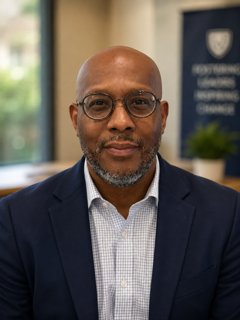
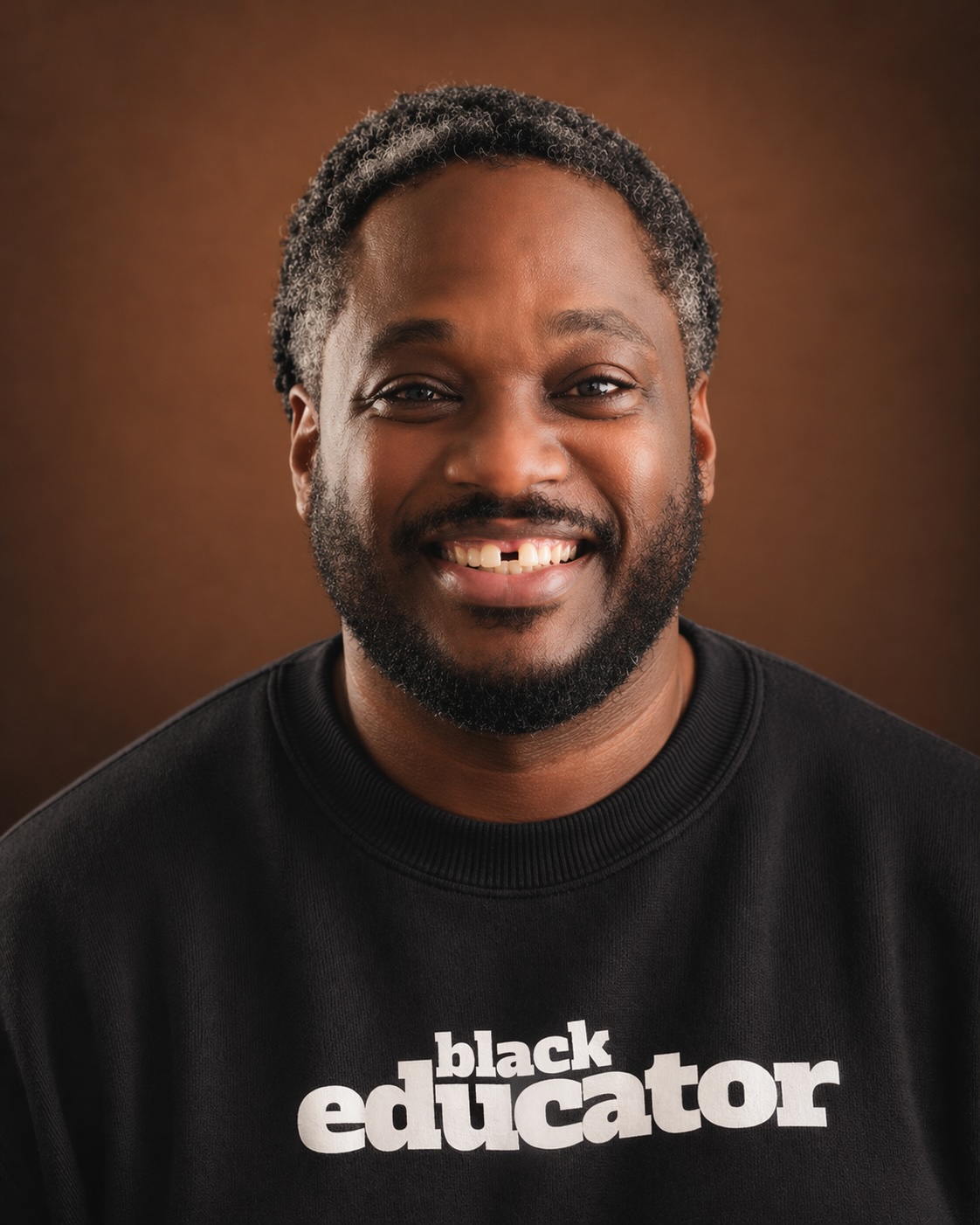
Dr. Jamal Watson
Dr. Jamal Watson is the editor of The H.E.L.F Review. An award-winning journalist and author and higher education consultant, Watson previously served as the executive editor of Diverse: Issues In Higher Education. He is currently a professor and associate dean of graduate studies at Trinity Washington University.
A graduate of Georgetown University, Watson earned a master's degree from Columbia University's Graduate School of Journalism, a master's in higher education from the University of Delaware, and a Ph.D. in Afro-American Studies from the W.E.B. Du Bois Department of Afro-American Studies at the University of Massachusetts, Amherst. He is the author of The Student Debt Crisis: America's Moral Urgency and two forthcoming books: a biography of the civil rights leader, Reverend Al Sharpton, and From the Pulpit to Power: Black Preachers and the Making of American Democracy. He is the recipient of numerous accolades, including the Ida B. Wells Journalism Award from the Higher Education Leadership Foundation.