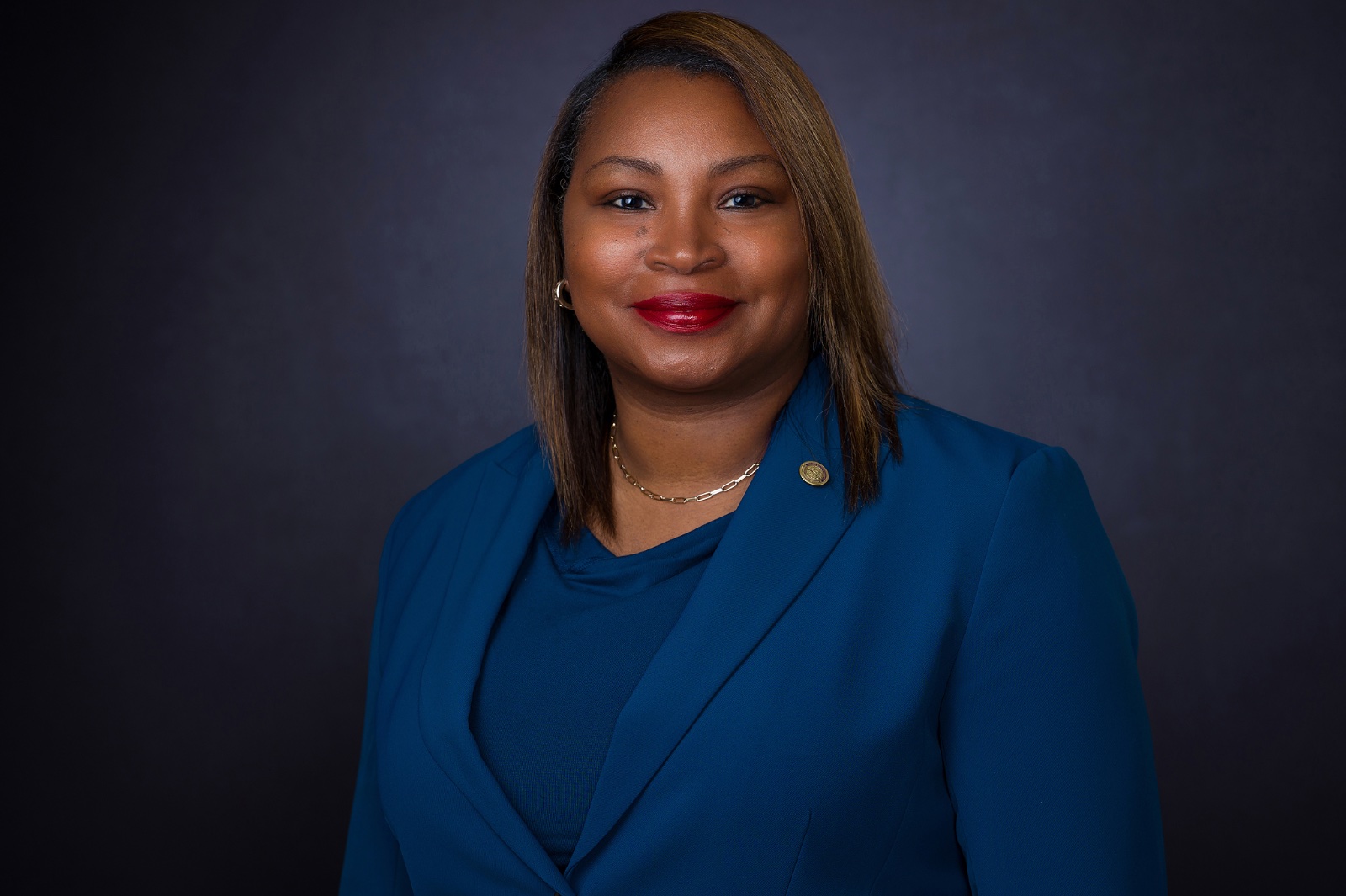
Maxine Greenleaf calls herself a college dropout. Her sister won't let the label stand, because Greenleaf eventually went back and finished.
She started college intending to become a psychologist, with a double major in psychology and political science. After four years, and a year short of graduating, she left to raise a child. She later completed her degree in mass communication at Mississippi Valley State University, working as a secretary while still a student. A stint in broadcasting and a public affairs internship followed, and she never left the field.
About two decades later, Greenleaf is now vice president of marketing and communication and chief communications officer at Alcorn State University. The Itta Bena, Mississippi, native has now led communications at all three of the state’s public four-year HBCUs: Alcorn, Jackson State and Mississippi Valley State.
This spring, speaking to Alcorn mass communications students at their Media Day, she passed along something she first heard as a fellow in the Higher Education Leadership Foundation, or H.E.L.F, Institute.
“Your path will not be linear,” she said. “You need to be able to be flexible and come up with a different game plan.”
Built for HBCUs
Greenleaf heard about H.E.L.F. from Dr. Archie Tucker, a fellow from an earlier cohort, and then started seeing it on social media. She was at Jackson State at the time and wanted to grow as a leader.
She had been through other leadership programs. Those classes often included people from campuses with far bigger budgets and staffs two or three times the size of hers.
“It's hard to make it fit,” she said. H.E.L.F., by contrast, “was crafted for us.”
She could take something from every leadership program, she said, but the techniques didn't always translate. H.E.L.F. focused directly on HBCU campuses, including their politics and finances.
“You have to work in it to really understand what actually takes place on a day-to-day basis,” she said.
Those lessons have lasted.
“I still use a lot of the information from the program today,” she said. “It really helped me to navigate this landscape and be able to pivot during these times.”
The Cohort
Greenleaf said many HBCU administrators assume they are handling problems alone. H.E.L.F. showed her otherwise.
“Oftentimes you think you're going through things by yourself, but you're not,” she said. “You find a great support system, [and] people who get it.”
H.E.L.F. alumni share a GroupMe chat, and her cohort keeps a separate one. People post promotions, birthdays, job openings and articles, and they rally around anyone looking for work.
“It's continued on beyond our time in the program,” she said.
She encourages emerging leaders to apply, especially those who plan to build their careers at HBCUs.
Overdue Recognition
Greenleaf said she couldn't have built her career without the HBCUs she attended and has worked for.
“Without my village and without my education, I would not have been able to achieve any amount of success,” she said.
She wants today’s students to have the same chance she had, and she wants the institutions to get their due.
“HBCUs deserve a voice and a seat at the table because we've done amazing things,” she said. “We don't get the recognition we deserve.”