Artificial intelligence is forcing institutions to answer a question they have never answered consistently: Who deserves to be believed?
In schools, students are increasingly accused of using AI to complete assignments. In workplaces, managers are beginning to question whether reports, analyses, and presentations reflect employees' thinking or the capabilities of a tool. Across society, conversations about authorship, transparency, and disclosure are becoming more common as AI becomes integrated into everyday life.
These concerns are not irrational. Artificial intelligence has introduced legitimate questions about how work is created and how contributions should be evaluated. Organizations should establish clear standards. Schools should define expectations. Transparency matters. Yet beneath the debates about technology lies a much older question. How do we decide whose intellect we trust?
That is why Phillis Wheatley matters today. When Wheatley sought to publish her poetry in 1773, many readers found her authorship difficult to believe. An enslaved Black woman who produced sophisticated poetry challenged assumptions foundational to the racial order of the time. Before her work could be accepted, she was effectively required to prove that she had written it.
The poems existed. They could be read and evaluated. What remained in question was whether someone like Phillis Wheatley was capable of producing them. The examination is often remembered as a literary event. It was also a credibility test. The issue was not simply authorship. It was belief.
More than two centuries later, the circumstances have changed, but the underlying question remains surprisingly resilient. Whenever societies encounter exceptional work, they do not always begin by evaluating the work itself. Sometimes they begin by evaluating whether they believe the person was capable of producing it. History offers countless examples. Black Americans have long faced heightened scrutiny when demonstrating intellectual authority, professional expertise, and leadership. Educational credentials, professional accomplishments, and measurable results have not always eliminated doubt. In many cases, they have simply changed the form that doubt takes. This history matters because artificial intelligence is arriving in a society that has never distributed credibility evenly.
Much of the public conversation about AI assumes that the primary challenge is determining whether technology was used. That is certainly one challenge. But it may not be the most important one.The more significant question may be what happens after AI use is disclosed. Imagine two students using AI in ways permitted by their school's policy. Imagine two employees operating within the same organizational guidelines. Imagine two writers following identical disclosure requirements. If their work is equally strong, will it be interpreted in the same way? Or will some be viewed as resourceful while others are viewed as dependent? Will some be praised for leveraging technology while others are suspected of hiding behind it? Will some receive the benefit of the doubt while others face a new burden of proof?
These questions are not really about artificial intelligence. They are about credibility. Technology may change how work is produced, but it does not automatically change how people are perceived. Artificial intelligence can generate content, but it cannot determine who is trusted. It cannot decide whose expertise is presumed legitimate. It cannot eliminate the assumptions that people bring to evaluations of competence, intelligence, and authority. Those judgments remain deeply human.
This is why the most consequential impact of AI may not be technological at all. It may be social. Every major technological shift changes the way work is performed. Far fewer change the way societies assign credibility. The printing press did not eliminate prejudice. Universal public education did not eliminate prejudice. The internet did not eliminate prejudice. There is little reason to believe artificial intelligence will be different.
If anything, AI may become another arena in which longstanding questions about legitimacy and trust are negotiated, not because the technology is biased by design, but because human beings continue to evaluate one another through assumptions they often fail to recognize.
Phillis Wheatley's examination reminds us that credibility tests rarely emerge in a vacuum. They emerge within societies that already possess beliefs about intelligence, authority, and legitimacy. The question facing us today is not whether AI should be governed. It should. The question is whether the new credibility tests emerging around AI will be applied differently depending on who stands before them. When two people produce equally strong work, will they be afforded the same presumption of competence? Or will some continue to face an examination long after others have been believed?
The technology is new, but the test is not.
______
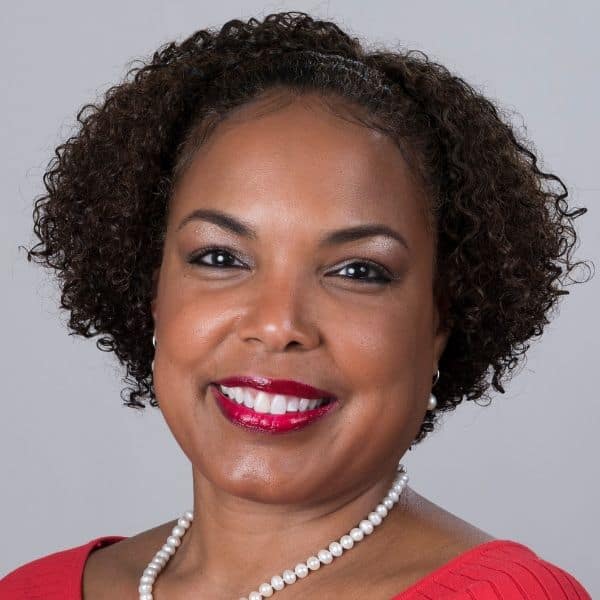
Dr. Rehva D. Jones is a higher education scholar, educator, and consultant with 15 years of teaching experience at the University of the District of Columbia Community College. Her work connects the history of Black educational opportunity with current questions of access, credentialing, and student debt.